



Physical AI Digital Twin
A living model of your floor, built from what your sensors are capturing right now. Test a change before you make it, and give your AI a picture of the plant as it actually runs.

Most Twins Are Out of Date the Day They Ship
They are built from drawings, and facilities do not match their drawings for long. Tooling moves, cells get reconfigured for a surge, and the as-built diverges from the as-designed within weeks. By the next production review, the model is describing a facility that no longer exists.
Thinaer starts with capture. Live location, condition, and environment data from 50+ sensor types streams into Sonar, and that stream is what keeps the twin current. Legacy machines and equipment that never had a data port are included without being replaced, including assets that predate every network in the building.
The model reflects the facility as it runs today, so the decisions made from it hold up on the floor.
Built From the Yard, the Bay, and the Hangar
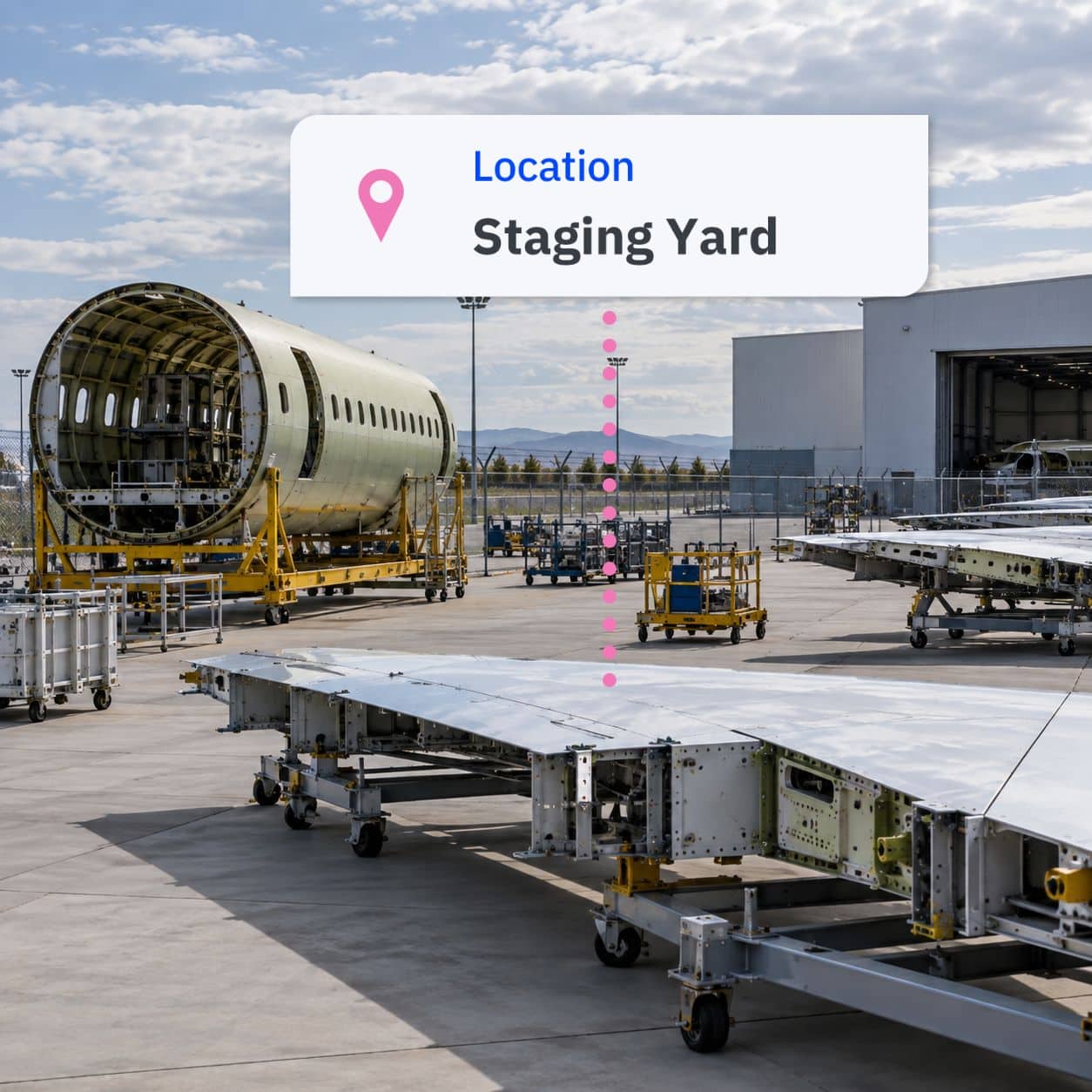
A twin is only as complete as the spaces it can see, and defense facilities are full of spaces other platforms cannot reach. Shielded bays. Areas with no backhaul. Outdoor yards where GPS is the only option. Classified spaces where most technology does not get through the door.
Thinaer is environment-agnostic by design. BLE, RFID, UWB, GPS, and LoRaWAN across wired, Wi-Fi, cellular, and 5G, chosen by what the space requires rather than what one vendor sells. The environment decides the mix.
That is why the twin covers the whole facility instead of the parts that were easy to instrument.
Capture, Learn, Act
01
Capture.
Sensors stream live facility activity into Sonar, the system of record for physical reality. Site scans and imagery become a 3D scene of the space.
02
Learn.
The scene and the live stream run together as a simulation, so you can model a line reconfiguration, a material route, or a surge scenario against measured conditions instead of assumptions.
03
Act.
Route optimization turns the result into AI-assisted material movement, with operators deciding what happens next. The model recommends. Your people run the floor and keep the accountability.
Digital Twin: Facility Monitoring
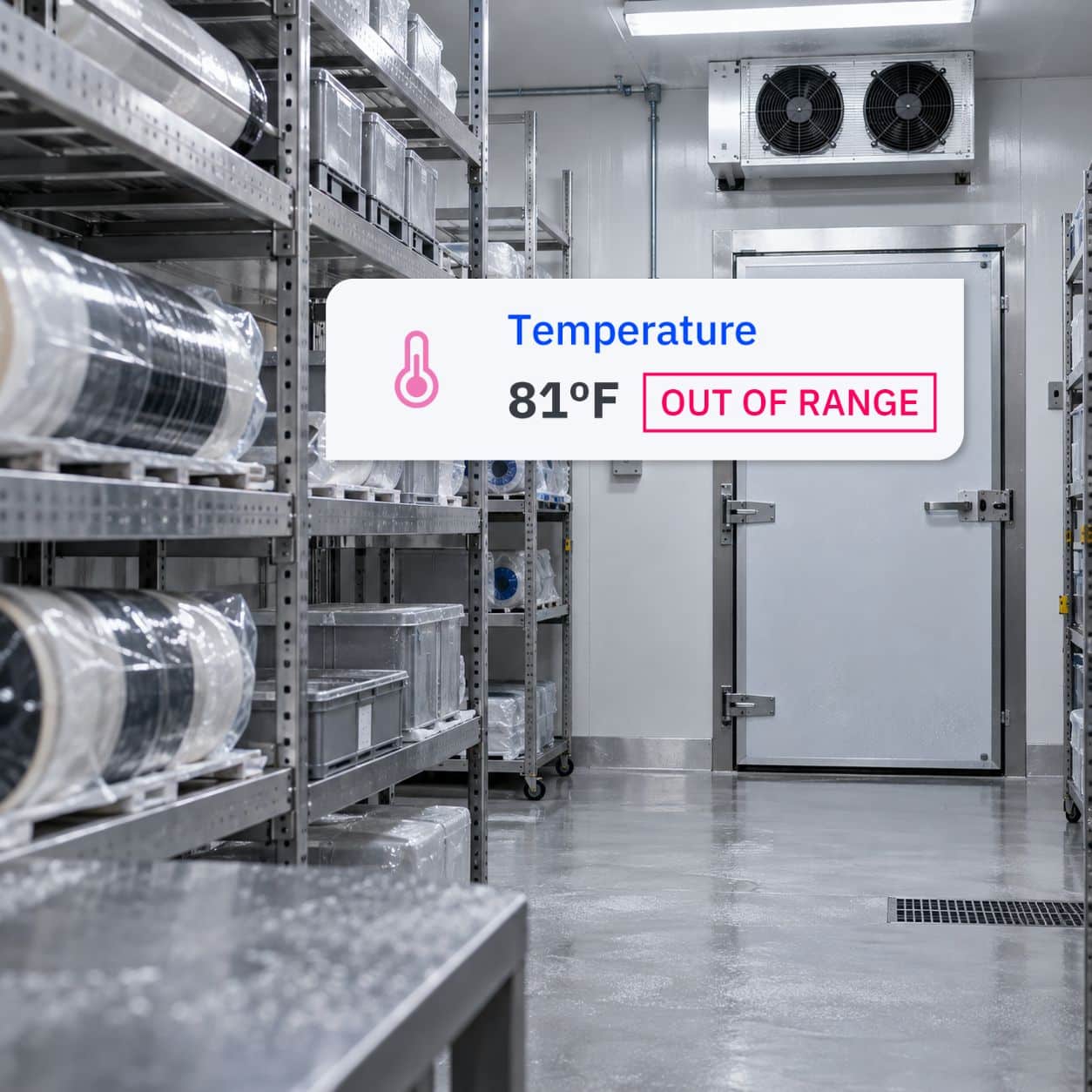
In defense manufacturing, the environment is part of the spec. Composite prepreg has a clock on it the moment it leaves the freezer. Paint and cure booths hold a window or the coating fails inspection. Controlled storage, calibration labs, and magazine areas all carry conditions that have to be proven, not assumed.
Thinaer captures temperature, humidity, air quality, and light across those spaces continuously, including areas where other platforms cannot be deployed. The twin holds that history next to the layout, so an excursion is tied to the exact bay, the material that was in it, and the shift it happened on.
When a program office asks whether the material held condition, the answer comes from the record instead of from recollection.
Digital Twin: Equipment Monitoring
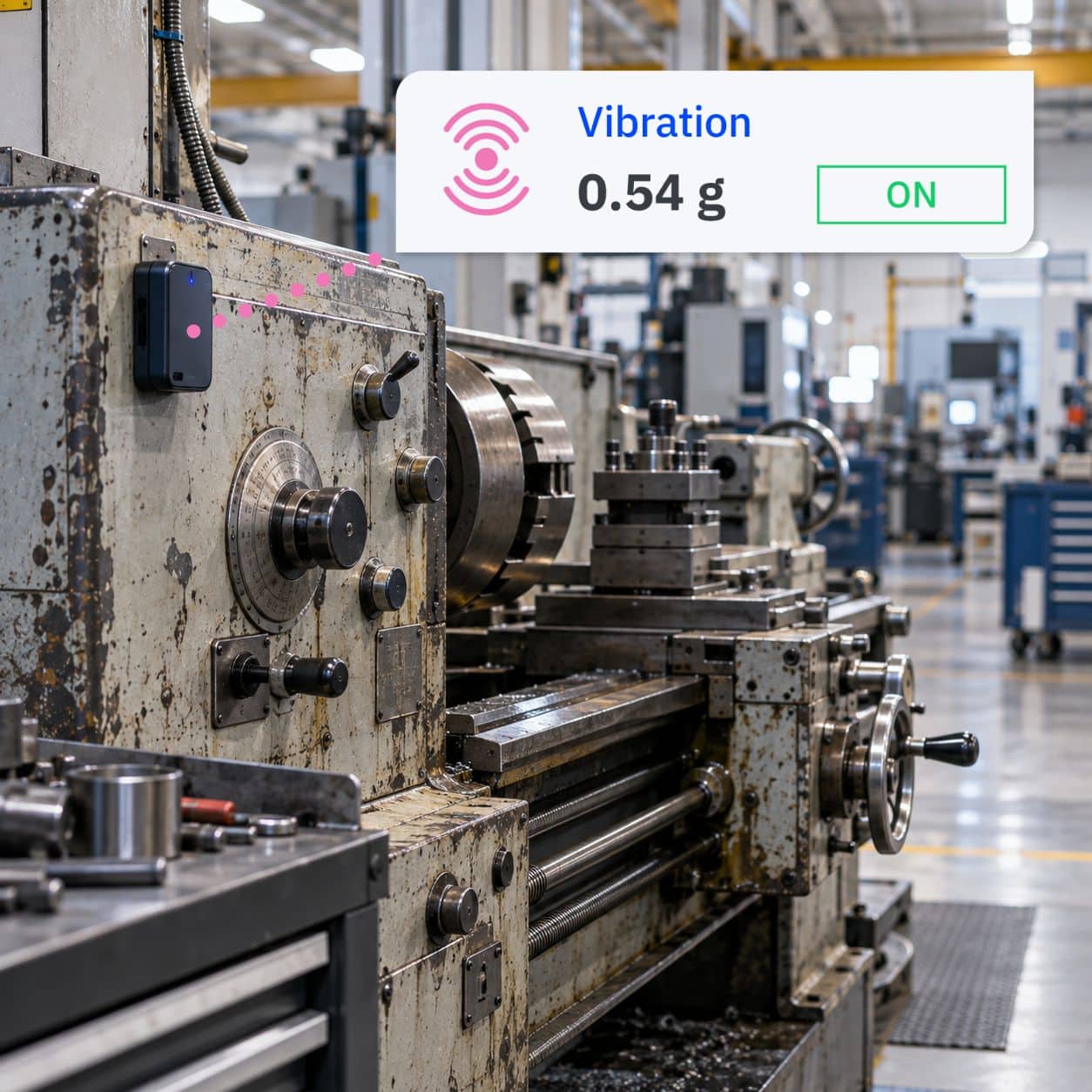
Vibration, voltage, run state, and utilization from machines that were never designed to report any of it. Sensors and beacons replace the clipboard, and the twin shows what is running, what is idle, and what is drifting across a floor where one tool going down can stall a delivery.
Compare runs against each other, normalize the data, and confirm a successful run without waiting for someone to write it down. Machine utilization measured this way turns capacity planning into arithmetic. You see the constraint before the schedule does.
Real World Digital Twin Use Cases
15%
less downtime
Tracking machine utilization to reduce equipment downtime for an aerospace manufacturer led to 15% less unscheduled equipment downtime.
9%
less material waste
Precision monitoring raw materials to reduce waste for manufacturing company resulted in 9% reduction in raw material waste.
Built for Environments That Do Not Allow Shortcuts
The twin runs inside your cloud boundary, commercial or government, under your identity management and your compliance posture. Nothing leaves your environment to make it work. Air-gapped on premises where the mission requires it.
- Patent pending in classified environments.
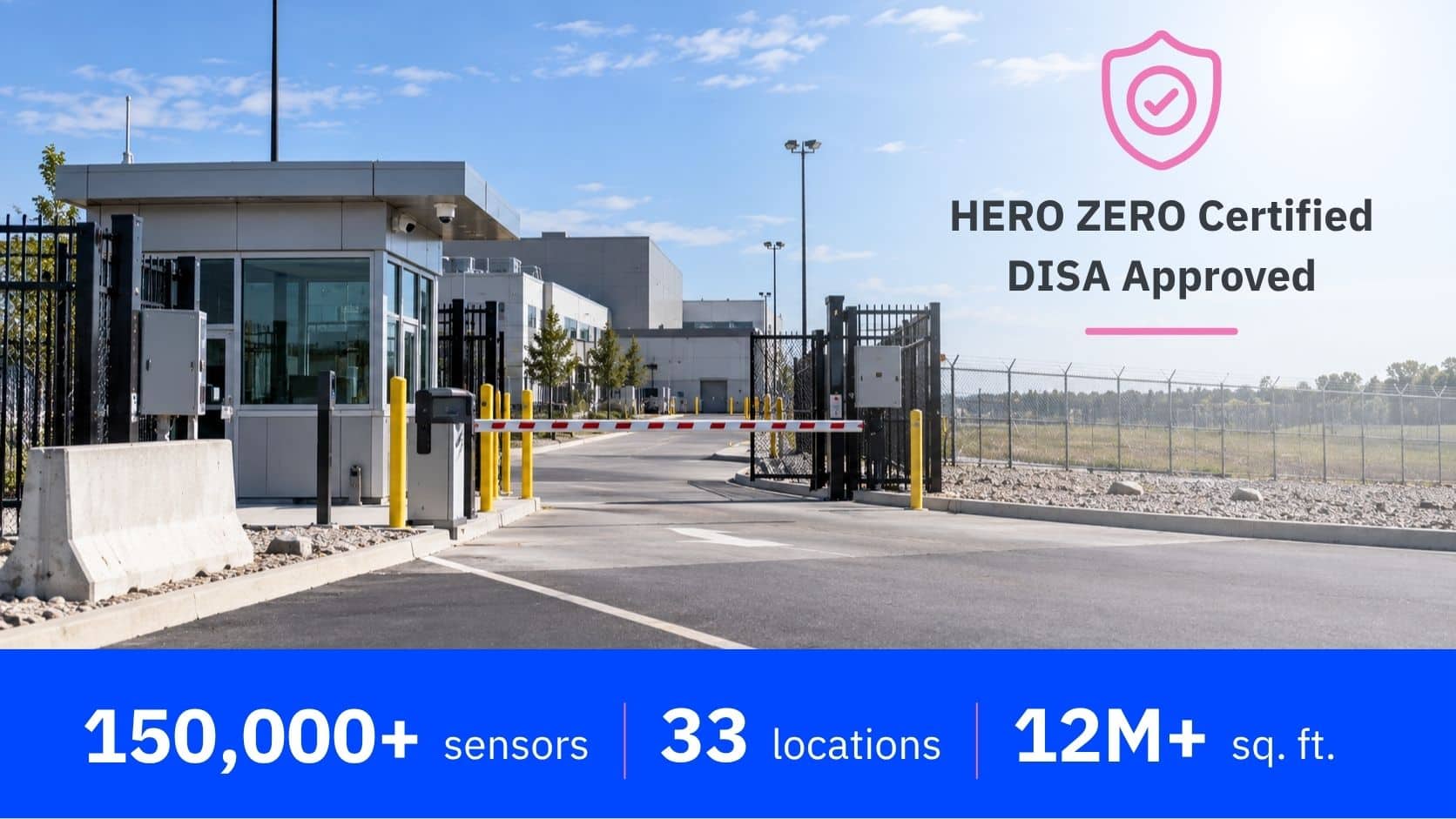
- HERO ZERO certified.
- DISA approved.
150,000+ sensors across 33 locations and 12 million square feet. 10M+ triggered events.
Documented multi-million-dollar ROI at a leading defense OEM.
Insights in days, not months, through tiered deployment.
Physical AI Starts Here
Bring us the space other platforms could not cover. The classified bay, the shielded area, the yard with no backhaul. That is the one we want to talk about.
Let’s talk.
Reach out directly, and we’ll walk the floor with you, scope a phased deployment, and show you what the twin looks like built from your own spaces — including the ones other platforms can’t reach.

Introducing Sonar 6.0.0: A New Era of Geospatial Insights and Enhanced Functionality
The Data Frontier: How AI and Digital Twins are Transforming Modern Manufacturing

How Thinaer Works: From Sensors to Structured Data
