



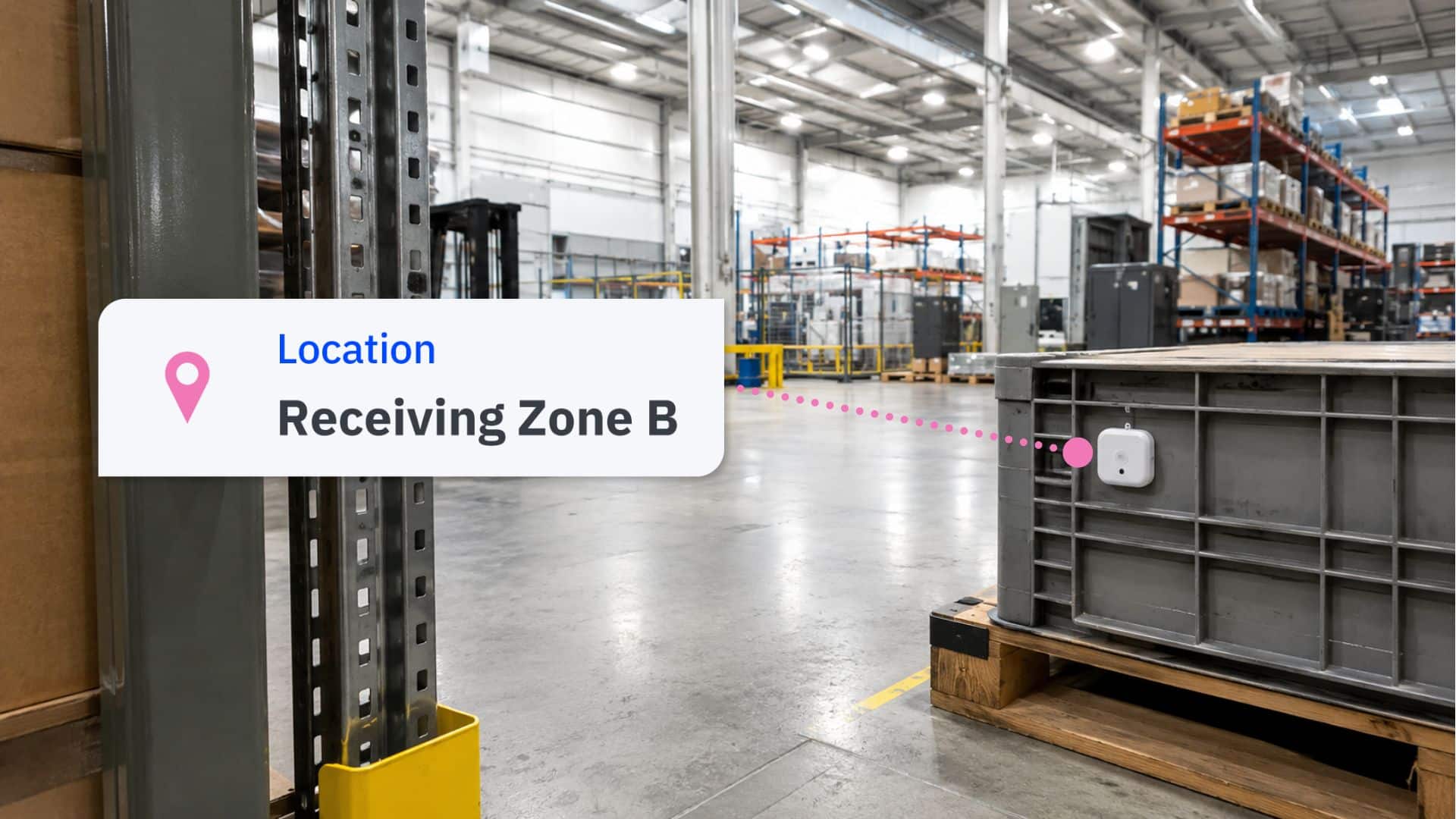
Most operations teams don’t have a shortage of data — they have a shortage of usable data. Sensors are logging vibration, location, and temperature every second, cameras are capturing footage nobody reviews, and machines are throwing off status codes nobody’s parsing. None of it is AI-ready data. It’s just noise sitting in a database: unlabeled, unstructured, and disconnected from the physical context that would make it meaningful.
AI can’t fix what it can’t see, and it can’t see what it can’t parse. Turning raw operational exhaust into AI-ready data isn’t a data-science problem. It’s a capture problem. Here’s what actually has to happen before unstructured operational data becomes something an AI model can use.
This is the third piece in a series on where AI initiatives actually break. The Capture, Learn, Act framework explained how the pieces fit together, and AI Can’t Fix What It Can’t See made the case that most AI stalls happen before the model is ever involved. This post covers the step in between: what turns a raw signal into something worth feeding a model at all.
What “AI-Ready” Actually Means
AI-ready data has four traits that raw sensor output almost never has on its own.
- It’s structured — consistent fields, not free-text logs or a proprietary binary format.
- It’s contextualized — tied to a specific asset, location, and environment, not just a timestamp and a number.
- It’s continuous — delivered as a live stream, not a one-time CSV export somebody has to go dig up.
- It’s portable — usable by whatever model, dashboard, or analytics tool the team actually runs, not locked to one vendor’s format.
Miss any one of those and the data might be accurate, but it still isn’t AI-ready. That gap is exactly where most AI initiatives stall — not because the model is wrong, but because the data feeding it never made the trip from raw to usable.
What Raw Data Looks Like Before and After
It helps to see the difference directly. A raw sensor feed typically looks something like this: a proprietary binary packet, or a log line with a device ID, a signal strength reading, and a timestamp. There’s no indication of which asset that device is attached to, where it is, or whether that reading means anything is wrong.
AI-ready data answers those questions before it ever reaches a model: which asset, which location, which environment, what the reading means in context, and whether it falls inside or outside a normal range. The raw version requires a person — or another system — to do that translation work every single time. The structured version does it once, at the point of capture, so every downstream tool inherits the context automatically.
That translation step is where most organizations get stuck. They have plenty of sensors and plenty of storage. What they don’t have is a consistent way to turn readings into records a model can trust without manual cleanup first.
| Raw Sensor Data | AI-Ready data |
|---|---|
| Device ID + signal strength + timestamp | Asset, location, environment, and reading — all in one record |
| One-time CSV export someone has to go find | Continuous live stream through Sonar, MQTT, or REST |
| Proprietary format, one vendor's tools only | Open format — any cloud, any model, any BI tool |
| Requires manual cleanup before a model can use it | Usable the moment it's captured |
The Anatomy of an AI Data Pipeline
Getting from raw sensor exhaust to AI-ready data takes an actual pipeline, not a one-off cleanup project. Three stages do the real work.
Capture. Sensors — BLE, RFID, UWB, GPS, LoRaWAN, Wi-Fi HaLow, whichever technology the environment calls for — collect location, movement, environmental conditions, and machine status continuously. This is the step where unstructured readings start turning into something usable, simply because they’re being collected consistently instead of sporadically.
Structure. The pipeline tags raw readings with asset ID, location, and timestamp, then normalizes them into consistent fields. This is what separates a folder full of sensor logs from a dataset a model can actually query.
Deliver. Structured data flows out continuously through Sonar for real-time visibility. It also flows through MQTT or REST APIs to whatever ERP, MES, BI tool, or AI platform the customer runs — no proprietary export, no vendor-locked format.
Skip the structuring step and a team has automated data collection without automating data usability. That’s exactly why so many AI pilots stall out right after the sensors go in. It’s the same problem we’ve written about before: AI can’t fix what it can’t see, and a pile of unstructured logs isn’t visibility.
Why Vendor Lock-In Breaks AI Data Strategies
A pipeline that only works with one sensor technology, or that hands data over in one proprietary format, creates a second problem down the line: AI vendor lock-in. The setup that made sense for a BLE deployment in a warehouse doesn’t necessarily make sense for a UWB deployment in a shipyard, and the AI model a team standardizes on today may not be the one that wins next year.
Thinaer’s approach starts from the opposite direction: the environment decides. Every sensing technology and every backhaul option — wired Ethernet, Wi-Fi, cellular, private 5G, LoRaWAN — runs through one platform. The structured data coming out feeds any cloud and any model the customer chooses, not the one a vendor picked for them in advance. That’s the difference between a pipeline that adapts as the environment and the AI landscape change, and one that has to be ripped out and replaced the moment either one does.
This matters most in industries where the environment itself is the constraint.
Why This Matters for Defense and Manufacturing
A defense contractor moving between classified bays and open production floors can’t standardize on a single radio technology across every space. Manufacturers face the same constraint with mixed equipment vintages — twenty-year-old machines next to brand-new ones — and can’t wait for every asset to support the same protocol before the data starts flowing. Locking the data pipeline to one vendor’s sensor technology means locking the AI strategy to whatever that vendor happens to support.
Picture a plant floor with a mix of legacy CNC machines, newer robotic cells, and manually operated tooling. A single-radio platform forces a choice: retrofit the old equipment to match the new sensor technology, skip it and leave a visibility gap, or wait for a hardware refresh that may be years away. An environment-first pipeline skips that choice entirely. It deploys whatever sensor technology fits each asset and normalizes the output into the same structured format regardless of source, so the AI model downstream never has to know or care which radio the reading came from.
What This Looks Like in Practice
Thinaer’s capture layer runs across 33 locations and more than 12 million square feet, powering 150,000-plus sensors across 40-plus sensor types. In 2025 alone, those deployments triggered more than 10 million events — geofence breaches, time-out alerts, environmental exceedances — surfaced in Sonar the moment they happened and delivered as structured data to whatever system each customer runs downstream.
For one leading defense OEM, that structured foundation produced a documented, multi-million-dollar ROI. Not from a new AI model, but from finally having AI-ready data for the models and dashboards already in place. The bottleneck was never intelligence. It was visibility into a physical environment nobody had captured before — the same gap the Capture, Learn, Act framework is built to close. Capture the physical world accurately first, and the Learn and Act layers — whatever AI, analytics, or digital twin platform a customer chooses — finally have something real to work with.
Frequently Asked Questions About AI-Ready Data
What does it mean to have AI-ready data?
It means the data is structured, tied to real-world context, delivered continuously, and usable by any model or tool without extra cleanup — not just accurate data sitting in a spreadsheet somewhere.
What are the principles of AI-ready data?
Structure, context, continuity, and portability. Data that’s missing any one of those still needs manual work before an AI system can use it reliably, no matter how accurate the underlying reading is.
What is an AI-ready data platform?
A system that captures raw signals from the physical environment and delivers them already structured, contextualized, and formatted for any downstream AI, analytics, or BI tool — rather than handing over a raw export someone else has to clean up before it’s useful.
How do you make data AI-ready?
Build a pipeline that captures continuously, structures data at the point of collection, and delivers it in an open format. Retrofitting AI-readiness onto years of unstructured logs after the fact is far harder than capturing it correctly from day one — which is why the capture layer, not the model, is where AI strategies actually succeed or fail.
AI-ready data isn’t something a team buys off the shelf. It’s what happens when the capture layer does its job: Capture structures the raw signal, Learn turns it into insight, Act turns insight into outcomes. Skip the first step, and the other two never get real data to work with.
If AI initiatives are stalling before they start, the fix usually isn’t a new model. It’s the data layer underneath it. See what real-time, AI-ready visibility looks like with Sonar.