



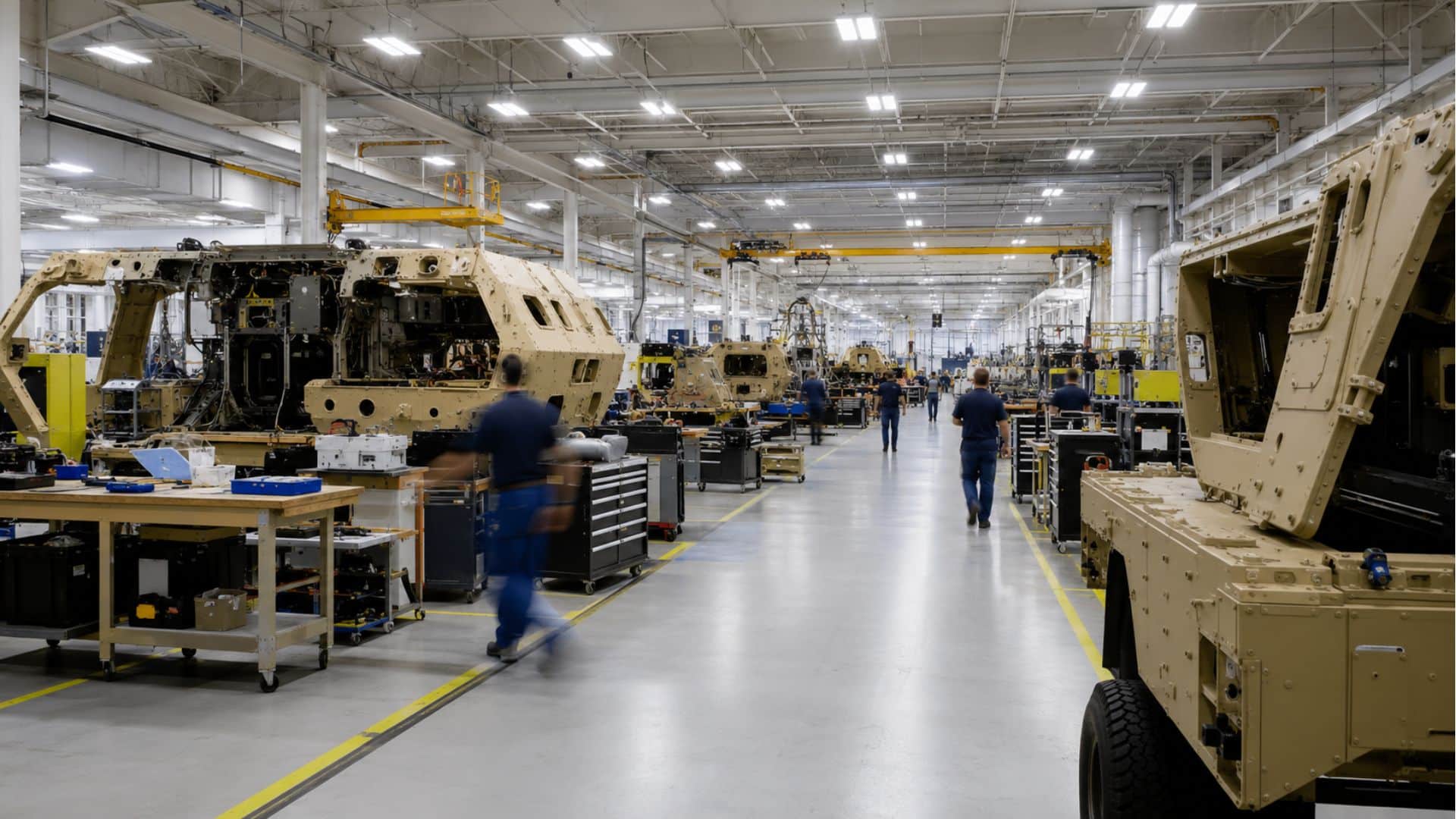
Most AI in operations stalls for the same reason. The model is fine. The strategy is reasonable. Even the pilot even works in the demo. Then it meets the actual factory floor, hospital wing, or shipyard — and it can’t see anything that matters. It reasons from a maintenance log instead of the machine. It answers from a spreadsheet instead of the door. The output sounds confident and is sometimes wrong, because the AI operational data it needed was never captured in the first place.
That’s the part of the AI conversation most teams skip, because it’s easier to blame the model than to admit the real bottleneck: what the model can see. And right now, most physical operations are functionally invisible to the systems trying to run them.
The Failure Mode Nobody Wants to Name
Walk through enough stalled AI-in-operations projects and a pattern emerges. It’s almost never the algorithm. The model architecture is sound, the vendor is reputable, the use case is legitimate. What’s missing is the data feeding it — specifically, data that’s current, contextualized, and tied to what’s physically happening right now rather than what someone logged into a system last week.
This is the failure mode that shows up before any AI gets connected to operations: the data layer gets treated as a formality instead of the actual foundation. Teams license a model, stand up a data lake, and only then discover that the operational reality they need to reason over doesn’t exist anywhere in machine-readable form. By that point, the AI initiative isn’t a modeling problem. It’s a visibility problem wearing a modeling budget.
Why AI Operational Data Doesn’t Just Exist
It helps to ask why this keeps happening. AI has gotten remarkably good at reasoning over digital content — documents, code, structured databases, transaction records. That’s because digital systems generate their own data as a byproduct of operating. Every keystroke, every database write, every API call leaves a trace.
Physical operations don’t work that way. A torque wrench moving between stations, a curing oven cycling through a temperature range, a work package stalled at a bottleneck — none of that generates a digital record on its own. This is precisely the gap that Physical AI exists to close: it’s the category of artificial intelligence built to operate on real-time signals from environments that were never designed to be legible to a computer.
Until something deliberately captures those physical events and turns them into structured data, AI in operations is working from inference, not observation. It’s filling in the blanks with whatever digital exhaust happens to be lying around — and calling that ground truth.
Sensor Data for AI Isn’t the Same Thing as Sensor Data
Here’s where a lot of well-intentioned IoT deployments still come up short. Installing sensors is not the same as producing sensor data for AI. A temperature reading by itself is just a number. It becomes useful only when it’s tied to a specific asset, a specific location, a specific process step, and a specific timestamp.
That contextualization is the difference between raw telemetry and AI-ready data. It’s also why the technology choice matters less than people assume. Some environments need the room-level resolution of Bluetooth Low Energy (BLE). Others — shipyards, classified bays, RF-constrained hangars — need the sub-foot precision of Ultra-Wideband (UWB) or the reach of RFID and LoRaWAN. The right answer depends on what the environment will allow, not on which radio a vendor happens to sell. This is the actual work of the capture layer: turning a chaotic mix of signals into one structured, queryable stream that any AI or analytics tool can consume.
What Happens When AI Operates Blind
The consequences of skipping this step aren’t abstract. They show up as a model that confidently recommends a maintenance window for equipment that already failed two hours ago. They show up as an assistant that can’t answer “where is this tool right now” because no system has updated since the morning shift change. Without a continuous, contextualized stream of live telemetry, AI in operations isn’t grounded in current reality — it’s grounded in whatever was true the last time someone happened to type something into a system.
In high-consequence environments, that gap isn’t just an inconvenience. A defense contractor that can’t account for an asset in real time has a readiness problem. A hospital that doesn’t know an isolation room fell out of environmental compliance two hours ago has a patient safety problem. The AI doesn’t need to be smarter to catch these. It needs to be able to see them happen.
The AI doesn't need to be smarter to catch these. It needs to be able to see them happen.
Capture Before You Compute
None of this is an argument against AI in operations. It’s an argument about sequence. The Capture → Learn → Act framework exists precisely because the order matters: you cannot reliably learn from data you never captured, and you cannot act with confidence on a model that was never grounded in what’s actually happening on the floor.
The good news is that the technology to close this gap is mature. The models are here, and they’re powerful. What’s been missing for most organizations isn’t analytical capability — it’s a data layer that was built before the AI strategy was, instead of bolted on after it. Solve capture first, and the Learn and Act layers stop being a gamble and start being a straightforward extension of infrastructure that already exists.
A Note on Where Thinaer Fits
Thinaer is the Physical AI capture layer. We deploy sensors in the environments where capture has historically been hardest — including classified facilities, shipyards, and RF-constrained hangars — and turn what we capture into structured, AI-ready data delivered through open MQTT and REST APIs. Models and the analytics layer aren’t ours to build. We make sure the data exists, in the right form, so that whatever AI, analytics, or BI platform an organization chooses has something real to reason over. Physical AI starts here.