



The temptation is understandable. ChatGPT and other LLMs are producing remarkable results in customer service, content generation, and code development. So why not point one at your manufacturing operations and let it optimize everything?
Because it will hallucinate. Not because the model is flawed, but because it has nothing real to work with.
In fact, LLMs are pattern-recognition engines trained on text. Your factory floor doesn’t produce text — it produces physical events: tools moving between stations, temperatures fluctuating in curing ovens, equipment vibrating at changing frequencies, work packages progressing through assembly stages. As a result, none of this exists in a format that an LLM can access unless you deliberately connect those physical events to structured data streams.
The Hallucination Risk in Operations
When an LLM lacks grounded operational data, it fills gaps with plausible-sounding answers based on training data. In customer service, a hallucinated response might be embarrassing. However, in manufacturing operations, a hallucinated recommendation could be dangerous.
For example, ask an ungrounded LLM “What’s the status of Work Order 4471?” and it might generate a perfectly structured response based on what work order statuses typically look like — except none of it reflects reality. The work order might be stalled at Station 12 because a calibrated tool isn’t available, but without real-time sensor data, the AI doesn’t know that.
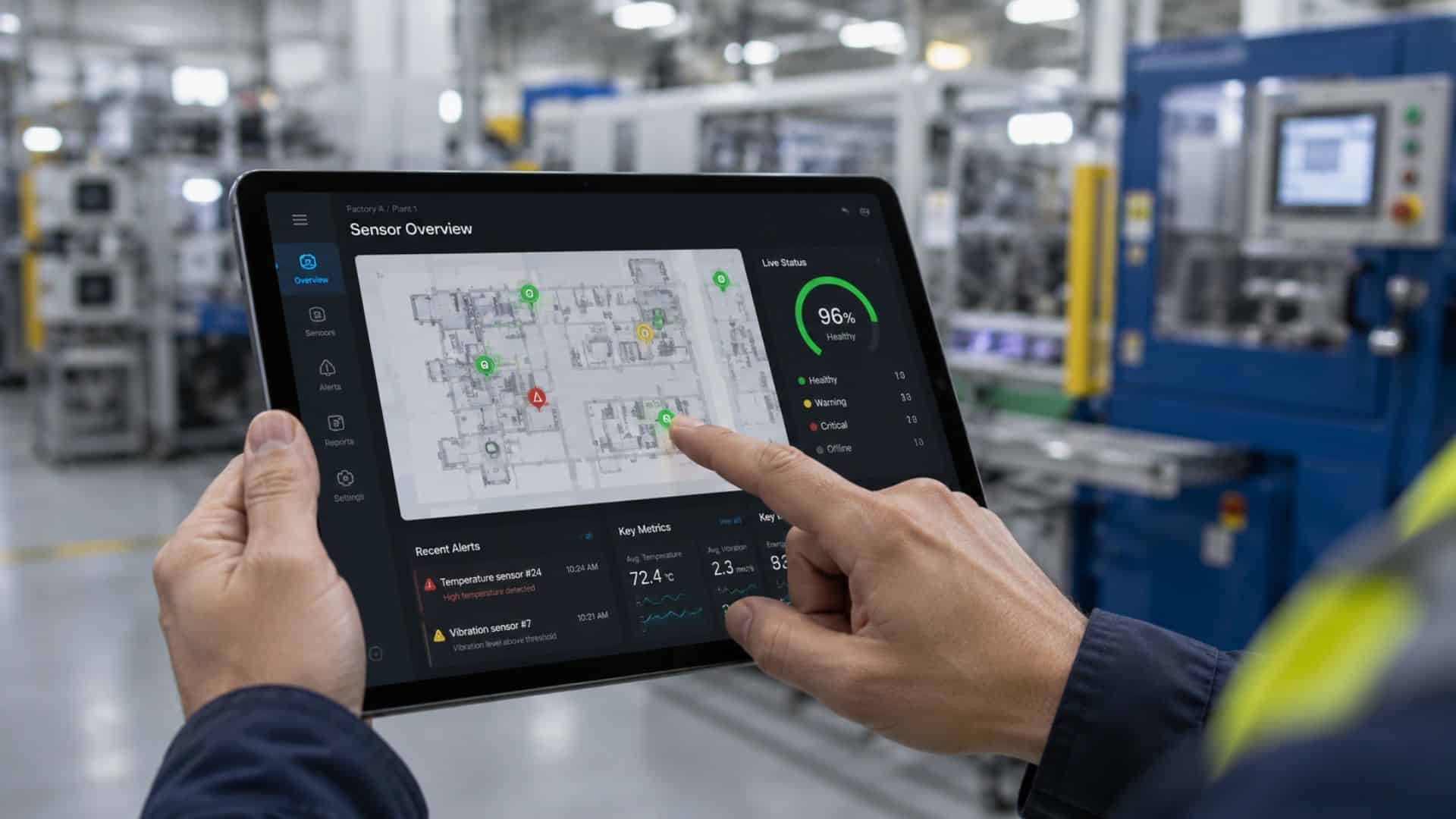
Therefore, grounding AI in operational reality requires live data from the physical environment: where assets are, what conditions exist, how equipment is performing, and how production is flowing. This is the sensing layer that transforms AI from a guessing engine into an operational intelligence tool.
What “Feeding It Right” Looks Like
The right data for operational AI has specific characteristics. Real-time is non-negotiable — it must reflect current conditions, not yesterday’s snapshot. Structure is equally critical, with each data point linked to an asset, location, process, and relevant thresholds. Context matters too, so a temperature reading is associated with the specific curing process it affects. In addition, delivery through standard APIs ensure any AI tool can consume it.
Thinaer provides exactly this. Our platform deploys hardware-agnostic sensors (BLE, RFID, UWB, LoRaWAN, GPS, environmental and equipment monitors) and transforms their raw telemetry into structured, GenAI-tuned data. Consequently, the Gartner-recognized Sonar platform provides immediate operational visibility, while MQTT and REST APIs deliver the same structured data to any AI tool you choose.
The result: when you connect ChatGPT, AWS Bedrock, or Microsoft Copilot to Thinaer data, the AI can answer real operational questions with real answers grounded in what’s actually happening on your floor.
The Right Sequence
Don’t start with AI. Instead, start with connection. Deploy sensors that capture what’s happening in your physical operations. Then let Thinaer contextualize and structure that data. From there, get immediate value through Sonar’s real-time visibility. Finally, layer on whatever AI tools make sense for your organization.
This is the Capture, Visualize, Physical AI framework — and it works because each phase builds on the previous one. You can’t visualize what isn’t connected. Similarly, you can’t evolve intelligence from data that doesn’t exist.
100,000+ sensors. 12M+ square feet. 2.2 billion bytes per hour. First mover in classified areas. The data foundation for operational AI starts here.