



The conversation usually ends the same way: “We’d love to use AI in our operations, but we’re a classified environment. It’s just not possible.”
It is possible. However, it requires a fundamentally different architecture than commercial AI deployments, but the capability exists today — proven, deployed, and generating value in the most security-sensitive programs in the Defense Industrial Base.
Why Classified Environments Seem Incompatible with AI
The perceived incompatibility comes from how most AI tools work. Commercial AI platforms operate in public clouds. They require data to leave your network for processing. They depend on internet connectivity for model inference. As a result, none of that works when your facility operates behind an air gap, your data is classified, and your network has zero external connectivity.
But AI doesn’t inherently require public cloud infrastructure. In fact, AI requires data. Specifically, it requires clean, structured, contextualized data. Where that data is processed — public cloud, GovCloud, on-premise, or air-gapped — is an architectural choice, not a technological limitation.
The Architecture That Makes It Work
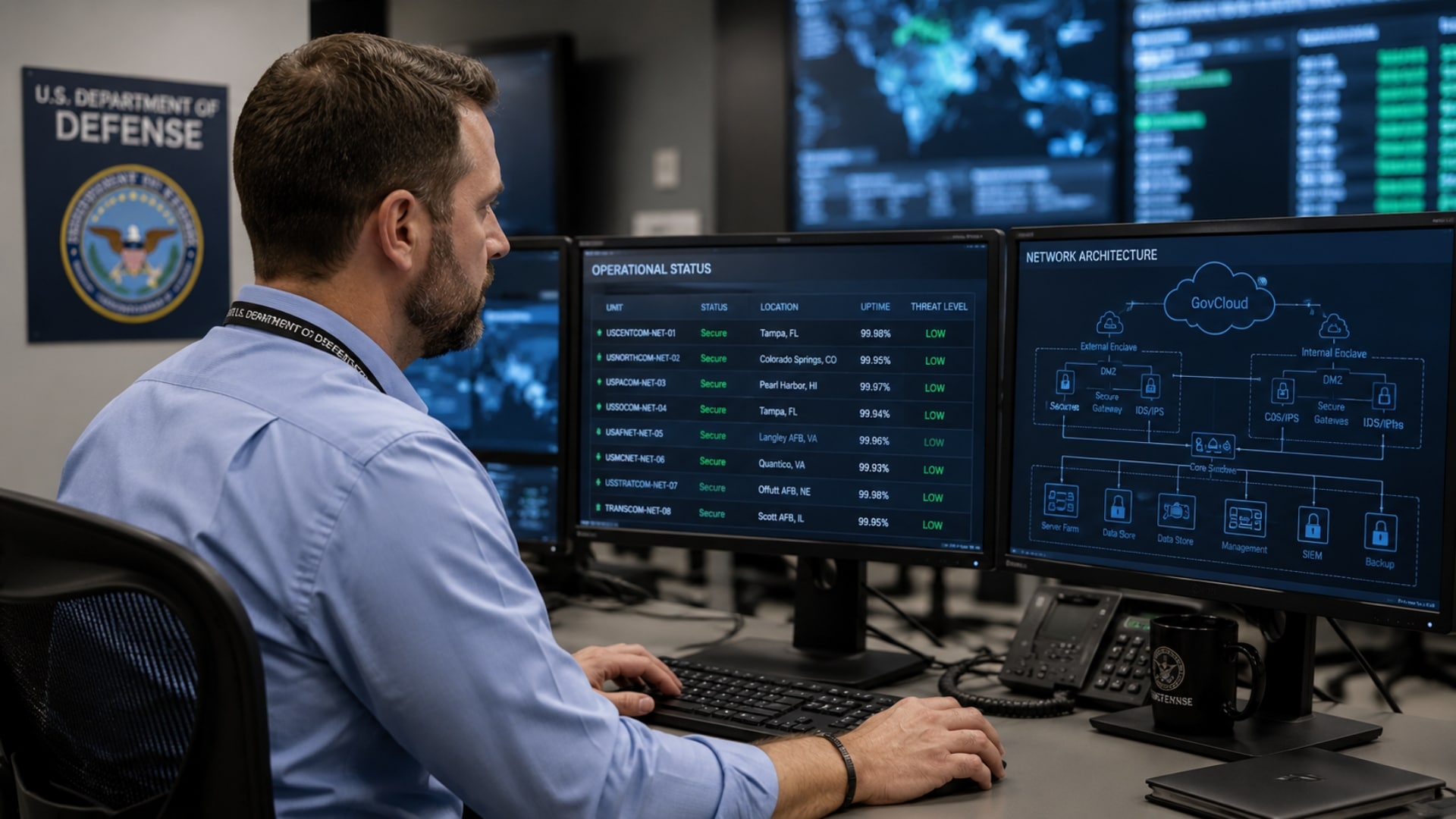
Specifically, the key is deploying every component of the data pipeline within the security boundary. Sensors capture operational data inside the facility. Gateways transmit data over the facility’s internal network. The data platform processes and contextualizes data within GovCloud, on-premise servers, or fully air-gapped infrastructure. AI tools run within the same security boundary, consuming structured data via internal APIs.
Thinaer was designed for exactly this architecture. We deploy within the customer’s own infrastructure — not alongside it, not adjacent to it, but inside it. As a result, the customer controls the security boundary. Thinaer provides the technology that operates within it.
For GovCloud environments, the entire Thinaer platform deploys within the customer’s GovCloud instance. Classified programs, Thinaer’s Secret Cloud version operates exclusively on Microsoft Azure’s classified infrastructure. Air-gapped facilities, hardwired gateways and on-premise processing ensure zero external connectivity.
As the first mover in classified areas (patent pending), Thinaer has proven this architecture in HERO ZERO environments and the most demanding security programs. This isn’t theoretical — it’s operational.
AI-Ready Data from Day One
The AI readiness of classified environments depends on data quality, not data location. Thinaer’s platform generates structured, GenAI-tuned data regardless of deployment architecture. Every sensor reading is contextualized with asset identity, location, process context, and threshold comparisons. Therefore, this structured output is ready for any AI tool that operates within your security boundary.
For organizations running AI tools on-premise or within GovCloud — whether that’s locally deployed LLMs, AWS Bedrock in GovCloud, or custom models — Thinaer provides the operational data foundation via MQTT and REST APIs. The AI tools consume the same clean, structured data they would in any commercial deployment. The only difference is that everything stays within your controlled boundary.
What This Enables
With the right architecture, classified environments gain the same AI capabilities as commercial operations: natural language queries about operational status grounded in real-time sensor data, predictive maintenance alerts based on actual equipment behavior, automated anomaly detection that correlates environmental conditions with quality outcomes, and AI-generated operational summaries for leadership.
Your security requirements don’t prevent AI adoption. They define the architecture AI requires. Thinaer provides that architecture.