



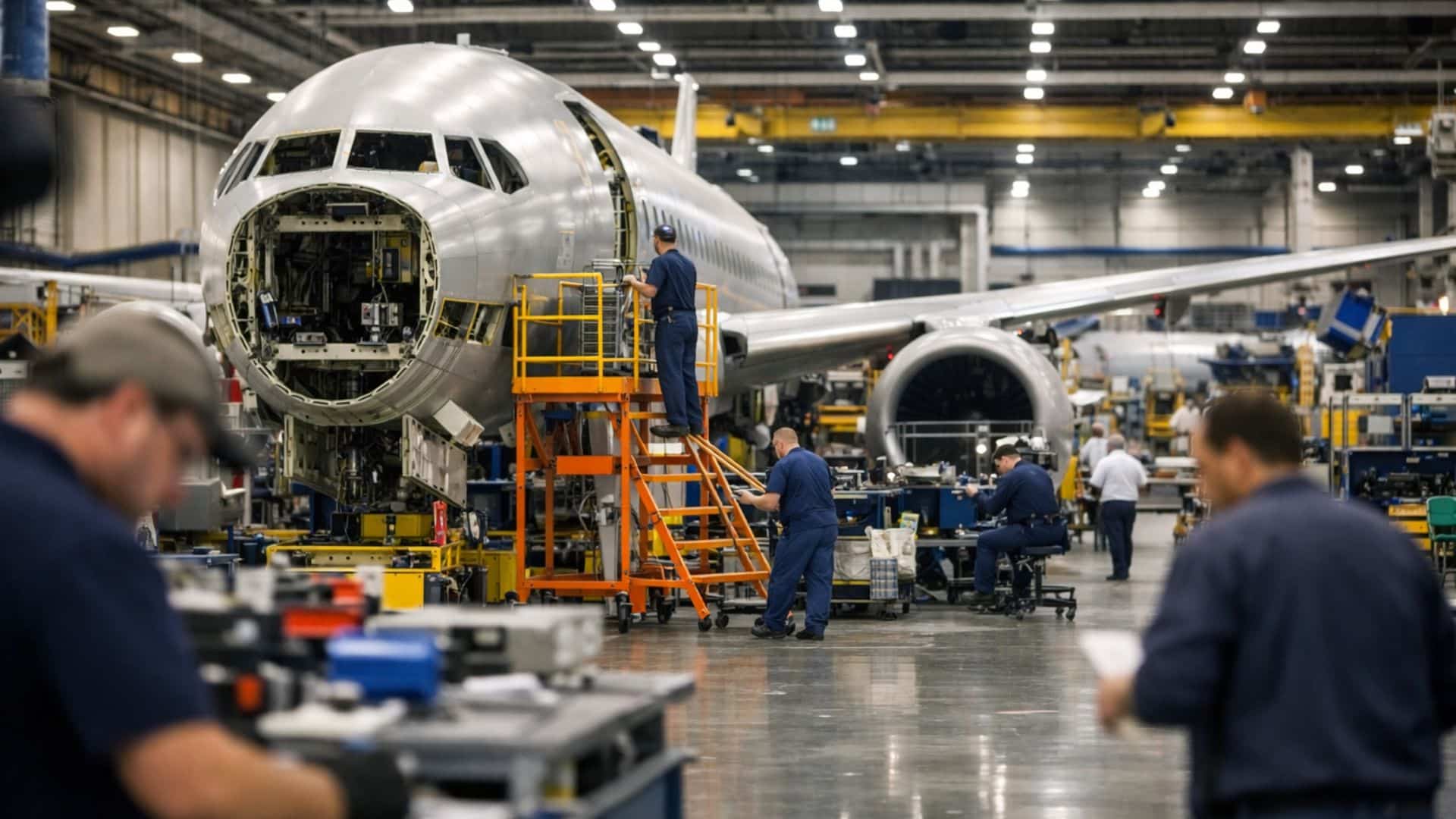
Aerospace manufacturing operates under some of the most demanding conditions in any industry. Tight tolerances, strict compliance requirements, and complex production programs leave little room for inefficiency. Yet across many facilities, a common challenge persists: a lack of real-time visibility into day-to-day operations.
These gaps in visibility, often referred to as operational blind spots, are not always obvious at the executive level. Dashboards and reports suggest control. Systems appear integrated. But on the shop floor, critical activities still rely on manual processes, delayed inputs, and fragmented data sources.
The result is a disconnect between how operations are perceived and how they actually perform.
Where Blind Spots Exist
Operational blind spots tend to emerge in areas where physical processes are not fully captured as data. In aerospace manufacturing, this often includes tool tracking, environmental monitoring, work-in-process visibility, and equipment health.
Mechanics spend valuable time locating tools and equipment without a reliable system of record. Environmental conditions in composites or coatings areas are checked periodically instead of continuously, increasing the risk of undetected deviations. Production managers rely on spreadsheets and status updates to understand work-in-process, often reacting to delays after they have already impacted schedules. Maintenance teams follow fixed schedules or respond to failures rather than acting on real-time equipment conditions.
Individually, these issues may seem manageable. Collectively, they create a significant drag on throughput.
The Impact on Throughput
Throughput in aerospace manufacturing is not limited by a single constraint. It is influenced by the interaction of multiple variables across the production environment. When visibility is incomplete, small inefficiencies compound.
Time spent searching for tools reduces productive labor hours. Unidentified environmental excursions lead to rework or scrap. Lack of real-time production visibility causes bottlenecks to go unnoticed until they disrupt downstream operations. Equipment failures introduce unplanned downtime that could have been avoided.
These are not isolated disruptions. They are systemic effects of operating without continuous insight into physical processes.
Improving throughput requires more than optimizing individual steps. It requires a complete and accurate understanding of how work moves through the facility in real time.
Shifting from Reactive to Real-Time
Aerospace organizations that successfully eliminate blind spots start by changing how data is captured at the operational level.
Instead of relying on manual inputs and periodic checks, they implement continuous data collection directly from the production environment. Sensors, connected devices, and location technologies provide a constant stream of information on asset movement, environmental conditions, production flow, and equipment performance.
This shift transforms how operations are managed.
Tool and asset visibility becomes immediate. Teams know where equipment is located without searching. Environmental conditions are monitored continuously, allowing issues to be addressed before they impact quality. Work-in-process is visible in real time, enabling managers to identify and resolve bottlenecks as they form. Equipment health is tracked dynamically, supporting condition-based maintenance instead of reactive repairs.
The focus moves from responding to problems to preventing them.
Creating a Reliable Operational Data Layer
At the core of this transformation is the establishment of a reliable data layer that reflects physical operations as they occur.
This data layer serves as the foundation for all downstream systems. Analytics platforms, dashboards, and AI models become significantly more effective when they are fed with complete, high-frequency, structured data. Instead of working with approximations, these systems operate on a real-time representation of the production environment.
This alignment between physical operations and digital systems is what enables meaningful improvement.
Without it, even the most advanced technologies are limited in their impact.
Driving Measurable Improvements
When operational blind spots are eliminated, the impact on throughput is measurable:
- Labor efficiency improves as time spent searching for tools is reduced.
- Quality outcomes strengthen as environmental conditions are maintained within specification.
- Production schedules become more predictable as real-time visibility allows for proactive adjustments.
- Equipment uptime increases through early detection of performance issues.
These improvements do not require a complete overhaul of existing systems. They result from making physical operations visible and actionable.
Over time, the benefits compound. As more areas of the facility are instrumented, the dataset expands. Patterns become clearer. Opportunities for optimization increase.
Organizations move from isolated improvements to sustained operational gains.
Why Aerospace Is Uniquely Challenging
Aerospace manufacturing presents additional complexity that makes addressing blind spots more difficult. Facilities often span large, multi-building campuses with varying connectivity requirements. Production environments range from clean rooms to outdoor staging areas. Security and compliance standards limit how data can be captured and transmitted.
These constraints require flexible deployment approaches that can adapt to different conditions without disrupting operations.
Successful organizations recognize that there is no single technology that fits every use case. Instead, they apply a combination of solutions tailored to specific environments while maintaining a unified view of operations.
From Visibility to Throughput
Eliminating operational blind spots is not an end goal. It is the starting point for improving throughput.
When organizations gain real-time visibility into their operations, they move from managing by exception to managing by insight. Decisions are based on current conditions rather than delayed reports. Issues are addressed before they escalate. Resources are allocated more effectively.
Throughput improves not because of a single initiative, but because the entire system operates with greater clarity and coordination.
Aerospace organizations that prioritize this approach are not simply digitizing their operations. They are aligning their physical processes with their digital systems to drive measurable performance gains.
The path to higher throughput does not begin with more analytics. It begins with seeing the operation as it truly is.